The verification layer
for legal AI.
AI changed how legal work gets drafted. Courts did not change what they expect from the lawyer who signs it. Veritas checks the citations in a filing, confirming each case is real, quoted correctly, and actually supports the point it’s cited for. It flags anything it can’t confirm, and produces a sealed, time-stamped record that the work was checked, before it leaves the firm.
Why Veritas exists.
In June 2023, a federal judge sanctioned two attorneys in Mata v. Avianca for citing six cases that did not exist. I started tracking what followed. The tracker we publish on this site now stands at 384 US matters in which a lawyer was fined, sanctioned, or referred to the bar over AI-generated citations, and the count climbs every month.
The cause is structural. Generative AI made drafting faster, and it also made fabricated authority cheap to produce and expensive to catch. Courts did not lower the standard in response. Rule 11 and its state equivalents still place the duty to verify on the lawyer who signs. So we built the infrastructure that discharges that duty: a federal and state citation corpus of more than 4.8 million entries that we own and refresh, and a verification pipeline that checks every citation in a filing against the record, then seals the result into a time-stamped certificate.
I am not a lawyer, and Veritas is designed around that fact. The product never substitutes its judgment for the signing attorney's. It hedges every verdict, records every source, and shows its work, because the report has to hold up in front of the same courts that created the need for it.
Verification, not vibes
Every claim the product makes about a citation is checked against a source and recorded. We hedge our verdicts and we show our work, because a lawyer's signature depends on it.
Built for scrutiny
The audience is courts, opposing counsel, and malpractice underwriters. We design for the moment a filing is challenged, not the moment it is drafted.
The lawyer stays responsible
Veritas is a tool that assists a licensed professional. We make the duty to verify easy to discharge; we never pretend to replace it.
Veritas is operated by the two people accountable for it. Product and engineering answer to one name, and every customer relationship answers to the other. There is no layer between the people who build the verification and the people who rely on it.
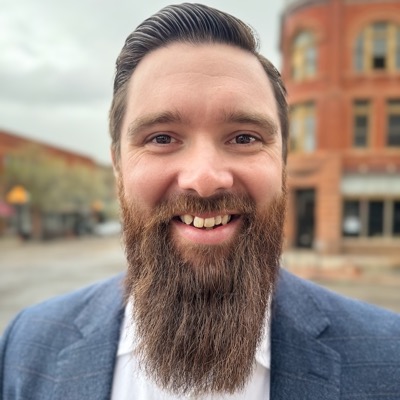
Andrew Zoll
Andrew built the Veritas verification platform and runs product and engineering. He owns the citation corpus, the verification pipeline, and the sanctions tracker the product is built on, and he is accountable for every verdict the product issues.

Zane Leaf
Zane leads revenue and owns every firm and agency relationship, from first conversation through procurement, onboarding, and renewal. He is the direct line for enterprise and government accounts.
A federal and state citation corpus we own and refresh, so existence checks do not depend on a third party's rate limits.
A running record of US matters where lawyers were disciplined over AI citations, updated monthly on this site.
A sealed, time-stamped certificate produced for every filing, ready to hand to a partner, client, or underwriter.
We check not just that a case exists, but whether it actually supports the point it's cited for.
Veritas is operated by Banah Enterprises, LLC, a Colorado limited liability company. Contracts, terms, and billing are entered into by Banah Enterprises, LLC. Governing law is Colorado.